Overview
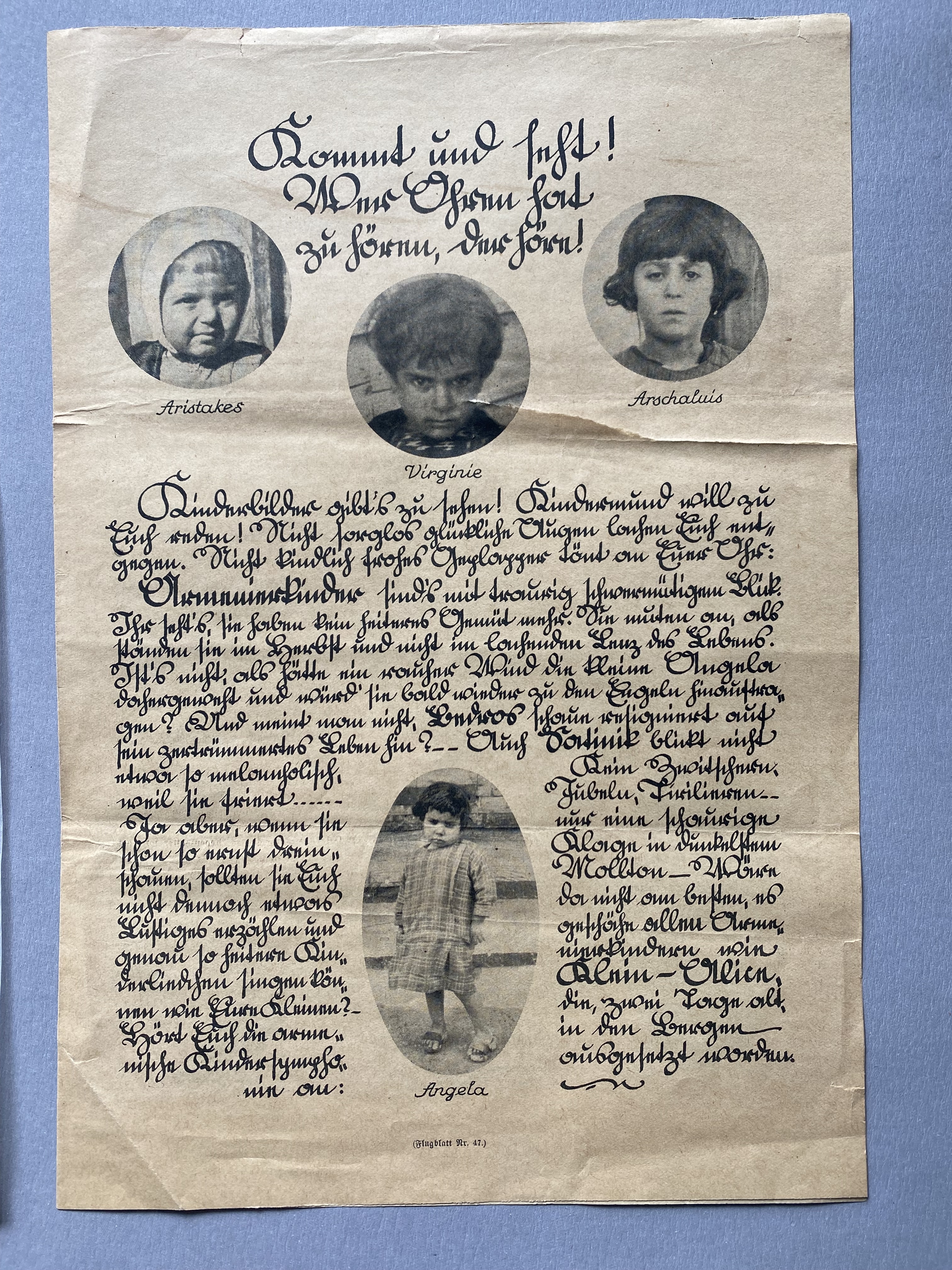
Focusing on German Pietist networks responding to violence against Ottoman Christian minorities, the book follows how aid initiatives were organized through fundraising campaigns, printed and visual culture, and public appeals. It highlights the labor involved in making suffering visible and actionable within a uniquely hostile geopolitical environment.
Structured around a series of scandals and internal disputes within and surrounding the Deutsche Orient Mission, the study traces how humanitarian authority emerged through conflicts over finances, moral conduct, political loyalties, and most importantly, religious commitments. These disputes reveal that the boundaries between salvation and relief, religion and politics, were continually renegotiated in practice.
By foregrounding these tensions, the project challenges existing narratives that frame humanitarianism as a linear process of secularization and professionalization, instead presenting it as a historically contingent, politically fraught, and contested form of engagement.